
Hooked on Maybe. Released by Boredom (2/2)
16 NOVEMBER 2026 · 6 MIN READYou are rewarded for doomscrolling by watching a great video after three dull ones, or by receiving a like. The randomness of getting the reward is called intermittent reinforcement, and it hooks us harder than a reward we can count on (check Hooked on Maybe. Pocket Casino for more). To unhook yourself, make rewards predictable, make the lever harder to reach, and give yourself better things to do. It feels boring at first, and that is the point: the flatness is the sign it is working.
Slots everywhere
Nir Eyal’s Hooked teaches product teams a four-step loop called the Hook model. On a social feed, it looks like this. A trigger, like a notification or boredom, gets you to open the app. The action is the easiest thing possible, a swipe, and it comes with a random reward in the form of a great video or a like. Then comes the investment, where you save or like a post, which teaches the algorithm how to make the next reward better and the next trigger harder to ignore.
The hook can also be unintentional. A product team runs A/B tests that reward engagement and ships whatever wins. This is Goodhart’s law in practice, which I covered in Perfect Data. Every Time. In short: when a measure becomes a target, it stops being a good measure.
An example of an app tuned for coming back is Duolingo: streaks, leaderboards, and a cute owl emotionally manipulating you to return. By Duolingo’s own account, the main metric is daily active users, and the main stickiness metric is the share of today’s active learners who return tomorrow. But engagement is not learning. A 1000-day streak does not make me C1 in Spanish, but 2.5 years of consistent learning might. Hence, I am not giving my time to an imaginary owl.
In fact, I choose not to spend time or build systems designed to exploit human vulnerability. If I cannot explain a mechanism to users’ faces without feeling strange about it, I will not propose it. A target metric for Duolingo that I would opt for would measure learning, not time spent, because time spent can signal addiction or an app that does not work.
How to stop
Habits change slower than most advice admits. In one study, 96 volunteers each picked a new daily habit (eating fruit with lunch, running before dinner) and logged every day how automatic it felt. The median time to reach automatic was 66 days, ranging from 18 to 254. Missing one day didn’t derail anyone 1. (Karen, that means when you are on a diet and eat a candy, you do not have an excuse to binge eat until next Monday. The week is not ruined. Sorry, not sorry.)
Don’t hunt for the rule
In 1948, Skinner put hungry pigeons in a box and dropped food in every 15 seconds, no matter what they did. Within minutes, several birds had developed rituals: one spun counterclockwise, another tossed its head, as if the move had caused the food 2. Researchers still argue about how much of that was learning. To me, it looks a lot like what we do with random rewards. We hunt for the secret, like the perfect time to post or the kind of photo that gets likes, and blame ourselves when the secret fails. The reward is random, so there is no rule to find. The hunt is what the schedule teaches you.
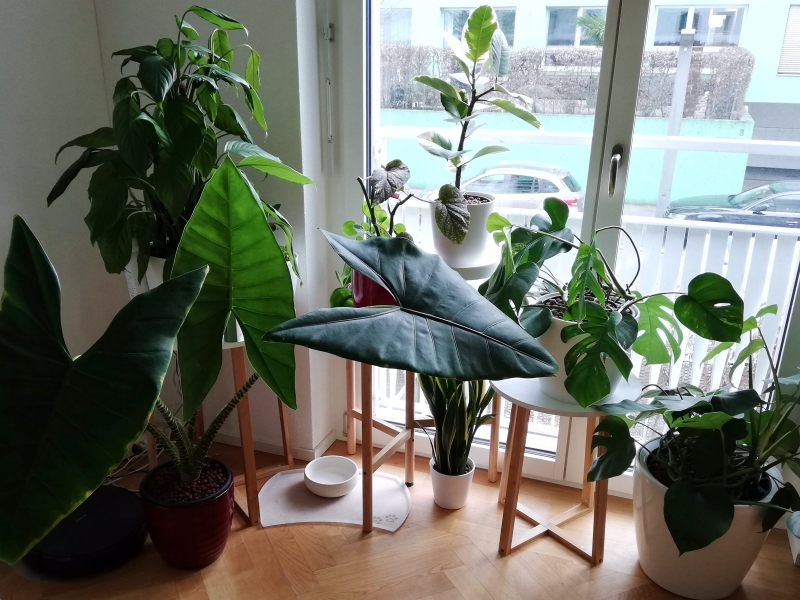
Even houseplants work that way. At one point I had around 46 species at home (Yes, it was Covid. Sue me, Karen!), and I checked them every day for a new leaf, although that is not how it works. I should know; I am a biologist. I even created a lab book to understand what made them grow better or worse. To this day, I have learned nothing. 🤡 But I did get emotionally attached to my plants.
Make it predictable
Give the rewards a timetable that you control. In one experiment, 124 adults spent one week checking email three times a day and another week whenever they liked. They reported less stress in the three-times condition 3.
Notifications follow the same logic. In a three-week experiment, scheduled batches improved well-being compared with getting them at any time, while turning them off did not help 4.
Replace the behavior
Move the app off your home screen, log out after every use, delete it, or give a friend your passcode. Note that it can get worse before it gets better, which is called an extinction burst 5. Clinicians who treat tics and bad habits tend to use a replacement action with an if-then plan: “If I reach for the app, then I do X.” A meta-analysis of 94 tests found that this significantly improves follow-through 6.
For example, my friends and I used to over-apologize. At times, we would say sorry even for lightly disturbing the air around someone as we passed by. So we made a rule: every unnecessary “sorry” costs 10 squats, immediately, anywhere. We called After-Sorry Squats. 😇 We did them in fancy restaurants, at traffic lights, on the street, the beach, a boat... Eventually, it slowed us down so much that we needed to start tracking them to do them later. (One day I did 230 on the balcony. And I am still not sorry, Karen.)
Use the lever for good
At the end of the day, a lever is just a tool. A knife can stab someone or feed someone, and the knife has no opinion. You do. For example, you can turn the mechanism around and build a habit lottery. A random picker chooses your next micro-task, and one fixed reward sits on top, like five workouts earning a pizza. You get to be The House and the gambler.
Intermittent treats help train dogs. If you give them a treat every time they do a trick, they won’t do it if you do not have treats. Switching from predictable to random rewards makes them obedient even when you have no treats at all.

Expect boring
Predictable rewards produce no surprise, so they feel flat. The excitement of unknowing becomes the void. Empty. Boring. But boredom may boost creativity. In a study, volunteers spent 15 minutes copying phone numbers from a phone book, which they rated as boring, and then had 3 minutes to list uses for two polystyrene cups. They came up with more uses than a control group that skipped the boring task. In a second study of 90 people, which tested creativity, the bored groups scored higher 7.
Boring is the new black. Give yourself time to get used to it, and it will give you your time back. ✨
References & interesting reads
- 1.
Lally, P., van Jaarsveld, C. H. M., Potts, H. W. W., & Wardle, J. (2010). How are habits formed: Modelling habit formation in the real world. European Journal of Social Psychology, 40(6), 998–1009.
- 2.
Skinner, B. F. (1948). “Superstition” in the pigeon. Journal of Experimental Psychology, 38(2), 168–172.
- 3.
Kushlev, K., & Dunn, E. W. (2015). Checking email less frequently reduces stress. Computers in Human Behavior, 43, 220–228.
- 4.
Fitz, N., Kushlev, K., Jagannathan, R., Lewis, T., Paliwal, D., & Ariely, D. (2019). Batching smartphone notifications can improve well-being. Computers in Human Behavior, 101, 84–94.
- 5.
Lerman, D. C., & Iwata, B. A. (1996). Developing a technology for the use of operant extinction in clinical settings: An examination of basic and applied research. Journal of Applied Behavior Analysis, 29(3), 345–382.
- 6.
Gollwitzer, P. M., & Sheeran, P. (2006). Implementation intentions and goal achievement: A meta-analysis of effects and processes. Advances in Experimental Social Psychology, 38, 69–119.
- 7.
Mann, S., & Cadman, R. (2014). Does being bored make us more creative? Creativity Research Journal, 26(2), 165–173.